A driveway is the highest-ticket flatwork job on a typical property, and it's also the one that takes the most abuse: vehicle loads, thermal cycling on every exposed side, and in Rosenberg, a subgrade that's actively moving underneath it. Whether you're pricing a new install or dealing with cracking on an existing drive, the base underneath and the joints on top decide more of the outcome than the concrete itself.
Why driveways crack here more than patios do
Two things load the dice against a driveway specifically. First, it's built for vehicle weight, which is a heavier design load than a patio and drives thicker slabs, more reinforcement, and tighter jointing. Second, a driveway runs the full width of a lot, exposed on both long edges to whatever the yard is doing, including Fort Bend County's Lake Charles clay, a smectitic Vertisol that swells wet and shrinks dry, opening cracks a foot or more deep and up to two inches wide across a typical dry season. A long, unbroken slab crossing uneven soil moisture (dry at the street edge, wetter near irrigation or a shaded side) is exactly the setup that produces differential movement, and differential movement is what cracks, heaves, and faults driveways in this market.
Thickness, reinforcement, and joints: the numbers, briefly
Rosenberg's no-freeze climate keeps a driveway at the 4-inch residential minimum rather than the cold-climate 5–6-inch upgrade; reinforcement follows the standard mesh-for-shrinkage-control, rebar-for-structural-load split; and control joints space at 24–36 times slab thickness, with driveway contractors commonly working the tight end (8–10 feet) because of the thermal cycling a driveway sees on every exposed side. Why those rules are climate-conditional is covered on why is my concrete cracking. What's specific to a driveway is the base prep underneath it and the clay-soil mechanics that make a driveway crack differently than a patio.
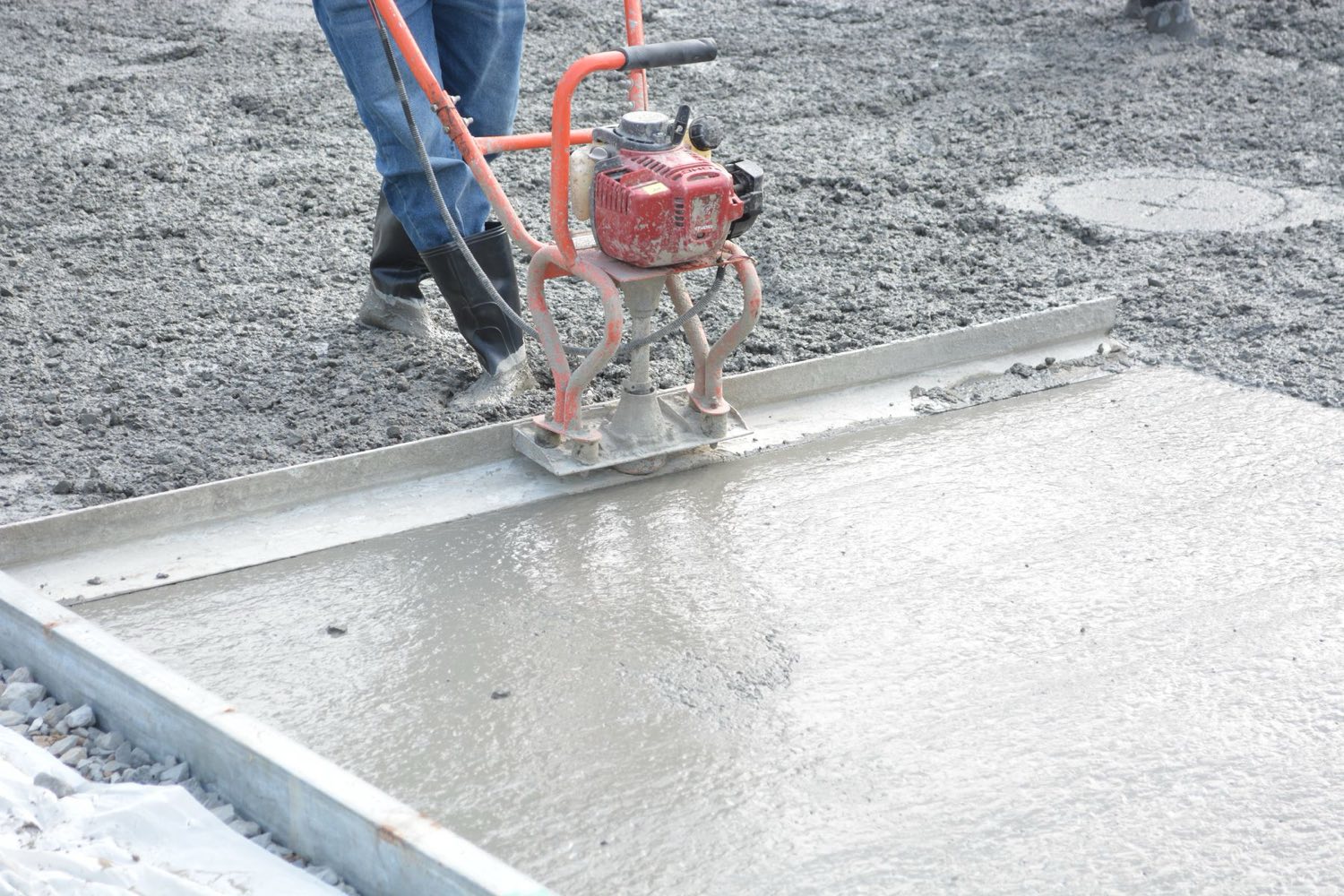
Base prep: the step a cheap bid skips
Full mechanism on why is my concrete cracking: the crushed-stone base course that separates a slab from Fort Bend's shrink-swell clay layer. What's driveway-specific is the stakes. A driveway's full-width, long-span footprint gives the base more linear feet of active clay to buffer than a smaller patio slab, so a bid that shorts this line item on a driveway is the single most common reason a new one cracks within a year or two.
Repair vs. replace for an existing driveway
Same method ladder as concrete repair: seal, lift, resurface, or tear out, depending on whether the slab is structurally sound. A driveway's load and exposure mean a patch-only approach tends to show its limits faster than on a patio, and the crack tends to return until the drainage and base underneath are actually addressed.
What it costs
New install runs roughly $8–$18 per sq ft (~$6,000 for a standard two-car driveway); repair averages about $1,812. These are typical ranges, not a quote. The full table, reinforcement add-on pricing, and what moves the number is on the concrete cost page rather than repeated here.
The right-of-way apron: a separate rule to check
Where a driveway crosses the public sidewalk into the right-of-way, that apron section is frequently governed separately by the local municipality. That's a generic pattern (thicker slab, continuous rebar, permit, stamped concrete often banned) seen across many jurisdictions, not a confirmed Rosenberg rule. Confirm the specifics with Fort Bend or Rosenberg public works before planning around it.
The question specific to a Rosenberg driveway
Why does my new driveway already have cracks, when the patio next to it doesn't? A driveway carries more design load and runs a longer, fully-exposed slab than a patio, so the same Lake Charles clay moving underneath both produces more differential stress on the driveway. See why is my concrete cracking for the general shrinkage-vs-structural read, and the "why driveways crack here more than patios do" section above for what's specific to this job.
Area covered
Rosenberg 77471, plus Richmond, Beasley, Pleak, and the Fort Bend County area.