A crack in a driveway or patio isn't automatically bad news, and it isn't automatically fine either. The difference is in the pattern, the width, and, in Rosenberg specifically, what's happening in the soil underneath. Reading those three decides whether you're in a seal-it, monitor-it, or call-someone situation.
The four things that actually crack concrete
Cracking has four distinct causes, and they call for different fixes, so telling them apart matters more than just measuring the crack.
- Plastic shrinkage forms in the first few hours, while the concrete is still fresh, when surface water evaporates faster than the mix can replace it. Worst in hot, dry, windy placement conditions, which describes a lot of Rosenberg pours in summer. Often invisible until the surface fully dries.
- Drying shrinkage is a slower, time-dependent contraction over weeks to months as the new slab loses moisture. This produces the random, web-like "map cracking" or crazing pattern, and it's the reason control joints exist: they pre-decide where that shrinkage crack goes instead of letting it crack randomly across the panel.
- Settlement happens when the subgrade underneath part of the slab compresses or washes out, and that section drops. A crack paired with a step or a faulted joint is the signature.
- Structural cracking comes from a load beyond what the slab can carry, or from the ground itself moving under it. This is the widest, often full-depth cracking, and the class most likely to point to a real problem underneath.
The mechanism behind most of it in Rosenberg: expansive clay
Fort Bend County sits on Lake Charles clay, a smectitic (montmorillonite) clay whose textbook type location is right here in the county. Smectitic clay swells when it's wet and shrinks when it's dry. On drying, it opens cracks one to two inches wide and a foot or more deep that stay open for weeks, roughly 60 to 90 cumulative days most years. That's happening under your slab, not just in the open yard.
A driveway or patio poured over that clay is lifted where the clay swells and dropped where it dries. Because moisture is never even across a lot (shade on the north side, a live oak pulling water from one corner, roof runoff soaking one edge), the movement is differential: different parts of the slab move different amounts. Differential movement is what actually cracks, heaves, and faults driveways, patios, and walks in this market. It's the same soil physics behind foundation movement in this county, just showing up in flatwork instead of a house's structural slab.
Why this isn't a frost story. Rosenberg's region barely freezes; the growing season runs about 310 days with few hard freezes. So the crack you're looking at almost certainly isn't freeze-thaw damage, even though that's the standard explanation in colder climates. It's the drought-then-rain moisture cycle working the clay underneath. That distinction matters for the fix: managing the soil's moisture (drainage, grading, keeping water away from the slab edges or evenly distributed around them) addresses the actual driver, where sealing the surface alone does not.
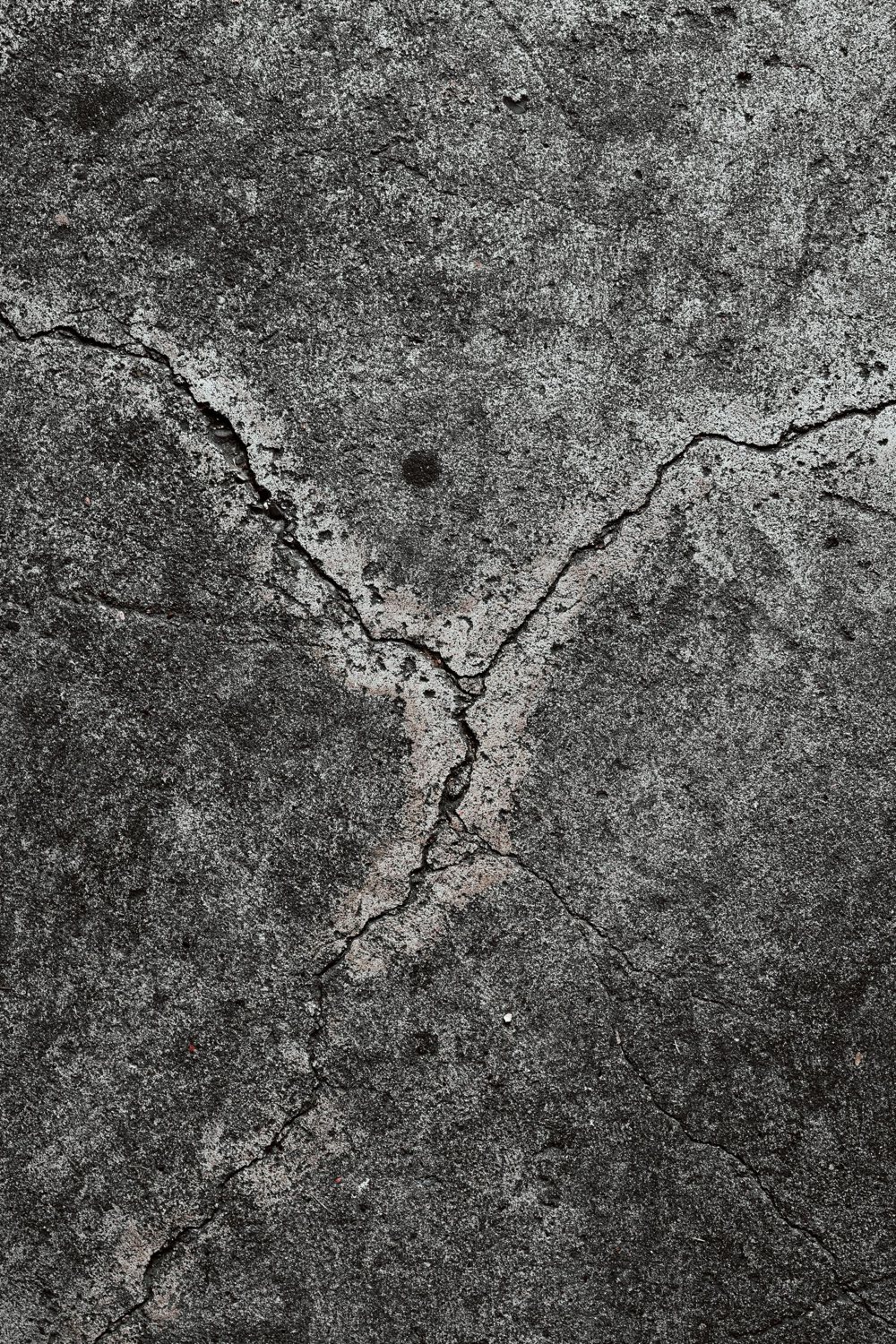
Reading the pattern, not just the width
Two cracks that look similar can mean very different things. Pattern tells you more than a tape measure alone.
- Random, web-like map cracking or crazing is surface drying-shrinkage. Cosmetic.
- A single straight crack mid-panel is shrinkage that missed a control joint. Usually cosmetic, worth sealing if it's letting water in.
- A crack paired with a faulted or stepped joint, or a panel that's visibly tilted means settlement or heave. This is a subgrade problem, and on Rosenberg's clay, that subgrade problem is very often the moisture cycle described above.
- Standing water on the slab (birdbathing), or water draining toward the house points to settlement or bad slope. Water pooling against a slab also erodes the base underneath it and drives more movement, so it's a diagnostic red flag on its own.
Crack width: the rule of thumb
- Hairline (under about 1/16 in) is typically cosmetic, just shrinkage the slab shed as it cured. Usually fine to leave alone unless it's growing or letting water in.
- About 1/8 in or wider warrants a closer look and is likely worth repairing.
- Wider than 1/4 in, any crack with vertical or horizontal displacement across the face, or a crack that runs the full depth of the slab signals a structural concern. Evaluate the cause underneath, not just the crack itself.
What this means for your slab
A trip hazard (a faulted joint or a heaved panel edge) is both a safety issue and a diagnostic: a vertical offset at a joint means something moved differentially underneath, which on this soil usually traces back to the clay's moisture cycle. If what you're looking at is random surface crazing with no faulting and no offset, it's very likely cosmetic drying shrinkage and can reasonably be monitored. If it's paired with a stepped joint, a tilted panel, or it tracks the seasons (wider in a dry spell, easing after rain), that's the signature of the clay moving; see repair options for whether that calls for a repair or a full replace.
What to do next
- Cosmetic (hairline, random crazing, no faulting): monitor. Mark the ends of a crack and check back after a season to see if it's grown.
- Moderate (1/8 in+, or a pattern that tracks the seasons): worth a closer look. See concrete repair for the repair-vs-replace ladder.
- Structural (1/4 in+, faulted joint, displacement, or a panel visibly heaved or tilted): the subgrade is the problem, not just the surface. Fixing the crack without fixing the cause (the moisture and base underneath) means it comes back. See vetting a repair crew for how to make sure a contractor addresses that.
Questions people ask
Is it normal for a new driveway to crack? Some cracking is expected. Plastic and drying shrinkage happen on nearly every pour, which is exactly why control joints exist: to steer that shrinkage crack to a place you don't see it. What's not normal is a crack that widens over time, pairs with a faulted joint, or shows up alongside a panel that's visibly tilted. Those point past normal shrinkage to a subgrade issue.
Why does my driveway crack worse in summer? Two separate things can both be true: hot, dry, windy placement conditions cause plastic-shrinkage cracking in the first hours of a NEW pour, and on existing concrete, a Rosenberg summer drought is exactly when Lake Charles clay shrinks the most, opening cracks that stay open for weeks until the rain returns. If an existing crack widens every dry season and closes up some after rain, that's the clay cycle, not the concrete itself failing.
Does a crack mean I need to tear out the whole slab? Not necessarily. Cosmetic shrinkage cracks are commonly sealed and left; a settled-but-sound panel can sometimes be lifted rather than replaced. Tear-out and replace is the required move only once a slab is structurally failed, badly heaved, or spalled through. See repair vs. replace for that decision.
Area covered
Rosenberg 77471, plus Richmond, Beasley, Pleak, and the Fort Bend County area.